The Kya Project

02
Jul 2026
Read More


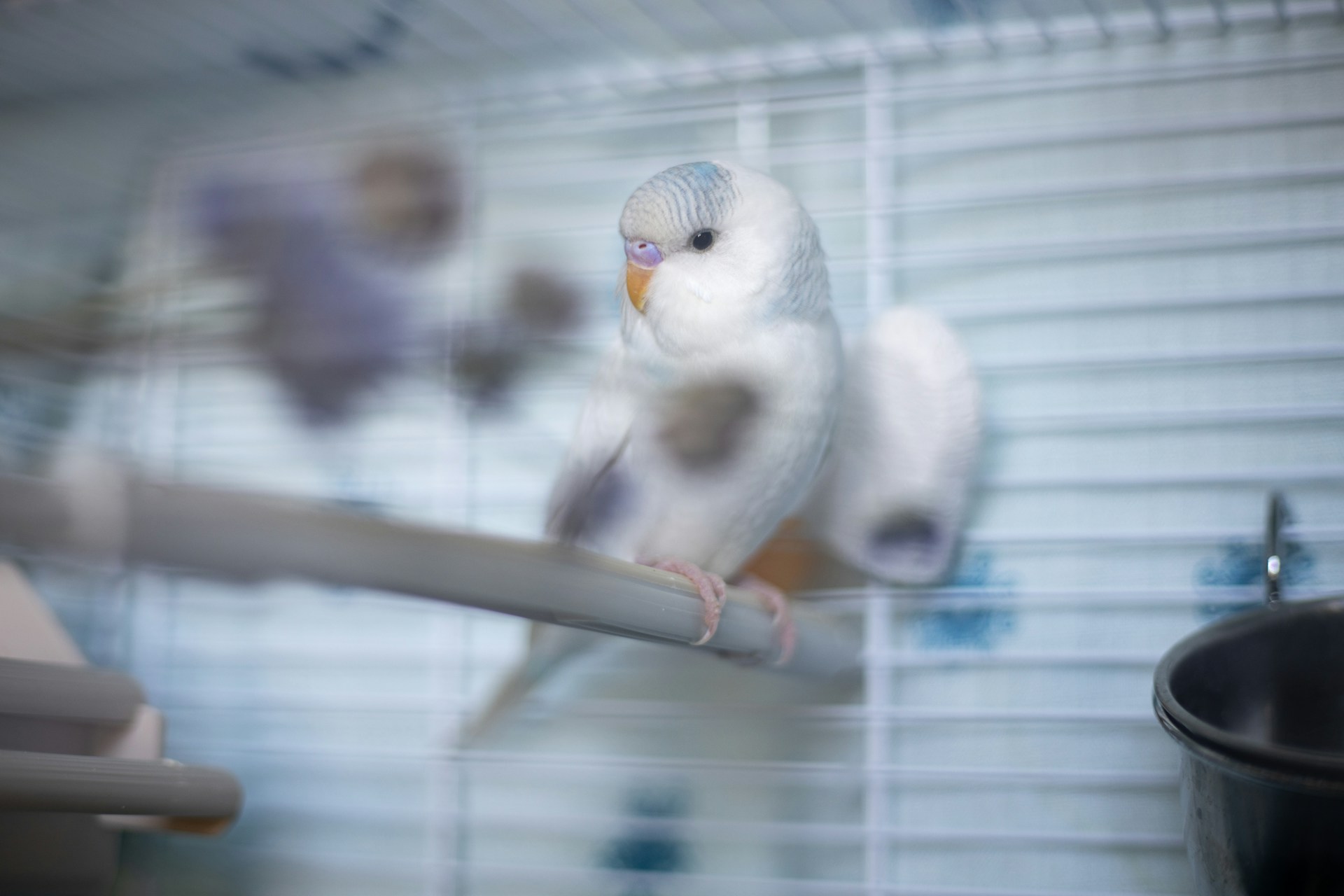
Ask an avian vet what they wish every owner did at home, and one answer comes up over and over: weigh the bird.
Not because weight is the whole picture — it isn't — but because of a hard fact about who parrots are. They're prey animals. In the wild, a bird that looks sick is a bird that gets picked off or pushed out, so parrots evolved to perform wellness long past the point where something is wrong. By the time a companion parrot looks ill — fluffed, quiet, on the cage floor — the problem has usually been underway for days or weeks. Veterinarians even have a name for the pattern: masking.
You can't out-stare a masker. But you can out-measure one.
A parrot can fake bright eyes and a good appetite. It cannot fake mass. Illness, pain, and reduced eating show up on a scale before they show up in behavior — often it's the first measurable change an owner can catch at home. Avian veterinary guidance commonly treats sustained loss approaching ten percent of a bird's normal weight as a clear see-a-vet signal, and for a cockatiel that's around nine or ten grams: less than the weight of two sheets of paper, and completely invisible to the eye under feathers.
That's the entire case for the scale. Feathers hide bodies. Grams don't.
A healthy bird's weight isn't a flat line, and knowing the normal wobble is what makes the abnormal drop visible:
This is also why the baseline matters. A vet seeing your bird for the first time has a single data point. A vet seeing your bird with six months of home weights has a story: what normal is for this bird, when the change started, how fast it moved.
The equipment is humble: a kitchen scale that reads in single grams, ideally with a perch attached (a dowel on a base works; so does a T-stand zip-tied to the platform). Many birds learn to step onto a scale perch faster than they learn anything else you'll ever teach them — it happens every morning and it's often followed by breakfast.
The routine that works is the boring one: same scale, same time of day, most days. Perfection isn't required; a weight two or three times a week still draws a useful line. What matters is that the line exists before you need it.
A few rules of thumb avian vets commonly give:
None of this replaces a vet. It's what gets a bird to the vet during the window when intervention works best.
A number on a sticky note is better than nothing. A trend you can actually see — and hand to a vet — is the real tool. However you keep it, keep it somewhere the line is visible and portable: the pattern is the signal, and the history is what a vet can act on.

(If you use Kya & Co., this is the weight page: log a gram reading in seconds, see the trend on your bird's record, and every weight rides along in the vet summary automatically.)


Stay updated with our charity’s news and see the impact we’re making changes together.


Copyright © The Kya Project