
The Kya Project

20
Jul 2026
Read More


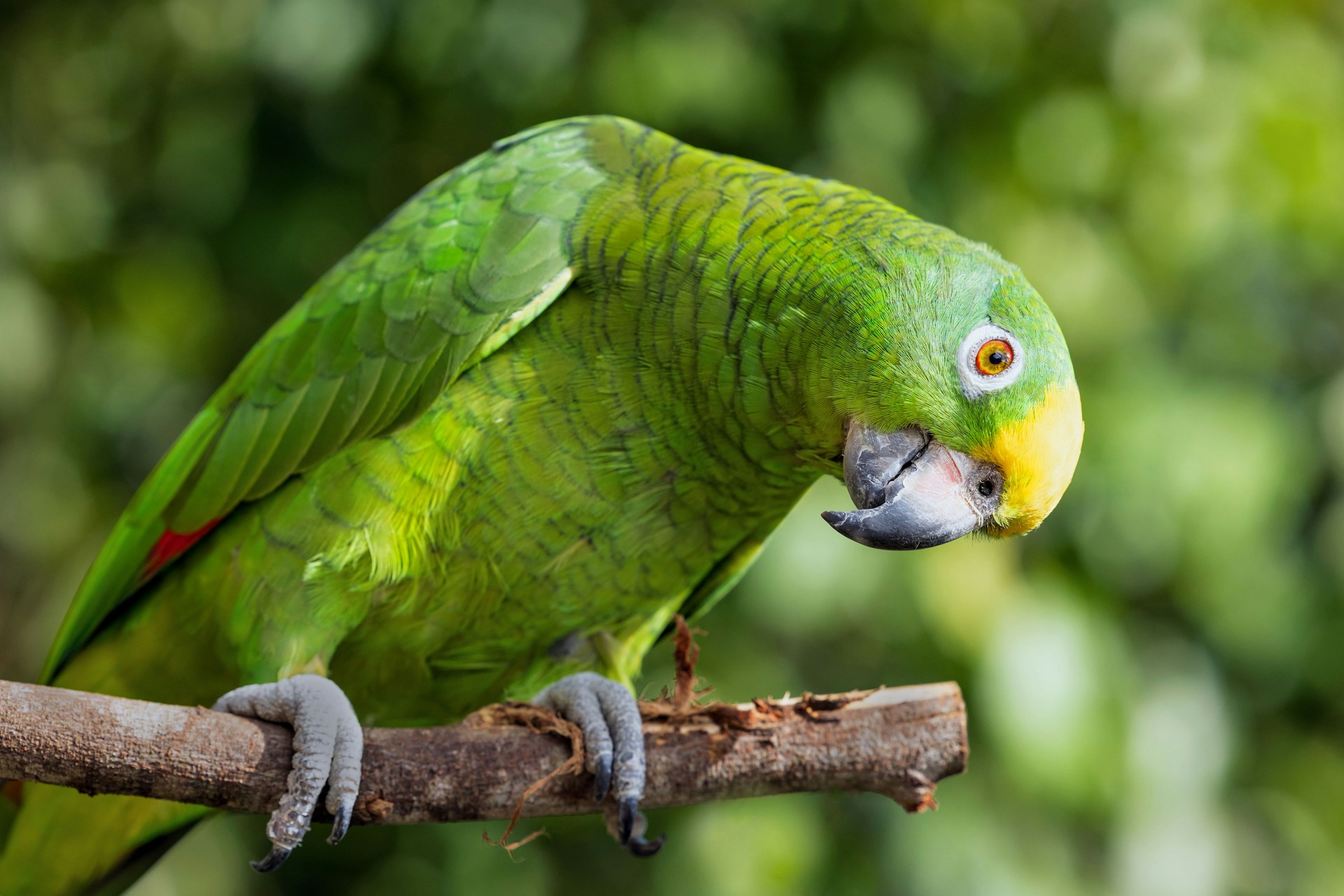
In a study on confiscated Yellow-naped Amazons in Costa Rica, researchers tested a common rehabilitation strategy: teaching parrots to fear humans before release. Many rescued parrots approach people after release, which increases recapture, poaching risk, and mortality. The team evaluated whether systematic human-aversion training actually improves post-release survival. You can read the complete study in the original paper.
Parrot training often feels straightforward while it is happening. A bird learns a cue, responds consistently, and the behavior appears stable. Because parrots learn patterns quickly, it is easy to assume the learning itself solved the problem.
But outside a controlled setting, behavior depends less on whether a bird knows something and more on how it interprets a situation. The same bird that responds perfectly in a quiet room may hesitate when something new appears, when its attention shifts, or when competing motivations exist at the same time.
The rehabilitation team behind this study was facing a version of that problem at a much larger scale. Confiscated parrots that had lived around people tended to approach humans after release, which often led to recapture or harm. The natural solution was to teach them to avoid people before returning them to the wild.
The deeper question was whether learning that rule would actually guide behavior once the birds had to navigate a complex environment again.
The researchers worked with adult Yellow-naped Amazons that had been removed from captivity. Each bird was evaluated for flight ability and tendency to approach humans. Individuals were paired so that each had a comparable counterpart.
Within each pair, one bird experienced repeated negative encounters when approaching people, carefully designed to encourage distance without injury. The other bird did not receive this conditioning.
After this period, all birds were released and monitored.
The study separated something that is often blended together in training discussions: performance during teaching and decisions made later in real life.
Inside the controlled setting, the training worked. Birds that experienced the aversion conditioning stayed farther from humans during testing. The behavior change was clear and repeatable.
If observation had stopped there, the conclusion would have been simple. The parrots learned to avoid people.
But the controlled setting presented a simplified problem. The bird faced one relevant decision at a time, and the correct response was easy to identify.
Life outside the enclosure presented many decisions at once.
Once released, the difference between trained and untrained birds became much smaller. Survival did not noticeably improve, and birds from both groups still appeared near human environments.
This did not mean the training had been forgotten. Rather, the avoidance lesson became one piece of information among many the birds had to consider. In natural landscapes, human spaces often overlap with food sources, landmarks, open visibility, or gathering points for other birds. A location can carry both risk and usefulness at the same time.
The parrots were responding to the full situation instead of a single signal. The avoidance behavior still existed, but it did not always outweigh other needs such as orientation, feeding opportunities, or flock movement. Their behavior reflected judgment under competing pressures rather than a failure to learn.
Many challenges owners encounter look similar on a smaller scale. A bird performs a behavior reliably in practice but hesitates in daily life. A cue works until excitement rises, attention shifts, or something interesting appears nearby.
These moments often feel like stubbornness or regression. More often they reflect the same process seen in the released parrots. The bird understands the behavior but is deciding how important it is compared with everything else happening.
Training teaches a relationship between action and outcome. Real life requires choosing between multiple known outcomes at the same time.
Reliable behavior grows when a bird learns not only what to do, but when that choice should still matter.
Instead of strengthening a behavior only through repetition in identical conditions, progress comes from gentle variation. The bird practices the same cue while mildly distracted, in a different room, after a pause, or while something else competes for attention.
This does not mean increasing pressure. It means allowing the bird to experience the behavior across ordinary situations so the cue becomes part of decision-making rather than tied to a specific setup.
When behavior changes under new conditions, the bird is showing where its understanding is still narrow. Expanding training gradually helps the rule become general rather than situational.
Over time, the bird stops relying on the environment to stay predictable before responding predictably.
The conservation implications follow the same logic. Avoidance conditioning teaches a specific association, but survival depends on balancing many needs at once. Wild-raised birds normally develop this ability over long periods while interacting with changing surroundings and other birds.
Confiscated parrots often lack that experience. They may understand that humans can be dangerous, yet still approach when other factors — food, landmarks, or flock behavior — appear more immediately important.
This suggests release preparation may benefit from environments that gradually resemble the real landscape rather than focusing only on strengthening a single learned response. Exposure to layered situations allows the bird to learn how different signals rank in importance.
The goal becomes rebuilding decision-making, not only installing avoidance.
The study highlights a shift in perspective. Parrots rarely fail training because they did not learn. They struggle because they must interpret many signals at once.
Behavior becomes stable when the bird has practiced applying the same lesson across changing circumstances. In homes, this means allowing training to exist in everyday life rather than only during practice. In conservation, it means preparing birds to evaluate a world rather than memorize one rule about it.
In both cases, reliability develops when understanding moves from a specific situation into general judgment.
This study investigated whether human-aversion conditioning improves post-release survival of confiscated Yellow-naped Amazons in Costa Rica. Birds were paired and assigned either to a training group receiving structured negative encounters with humans or to a control group without training. Researchers evaluated pre-release behavior and post-release outcomes.
Although trained birds showed increased avoidance during controlled tests, survival differences after release were limited. The conditioned behavior did not consistently generalize to real environments where multiple motivations influenced decision-making. The findings suggest successful release depends less on isolated conditioned responses and more on the bird’s ability to integrate competing environmental cues.


Stay updated with our charity’s news and see the impact we’re making changes together.



Copyright © The Kya Project